The beginning of conceptualizing new pieces is always a bit of a photographer's block for me. I think about new images and feel like my brain is a box of old art supplies and nothing new! It helps to get to know the families and children and browse similar artworks and eventually inspiration hits. I hope!
Labels
- Contextual Research (28)
- Coursework (47)
- FMP (47)
- Informing Contexts (31)
- Project Development (31)
- Surfaces and Strategies (32)
- Sustainable Prospects (25)
Showing posts with label Informing Contexts. Show all posts
Wednesday, April 10, 2019
Upcoming Photo Opportunities
I am in the middle of conceptualizing several different photo sessions specifically working with two different families. I've also had contact with the director of the Eastern Idaho Down Syndrome Family Family Connect organization about creating an image for some families or possibly the organization itself.
Featured
I was featured by Healing Images in a welcome post. You can see it
Healing images is a not-for-profit that will represent my work to hospitals and other facilities world wide. This will help my art reach new audiences as well as get my images to those that can benefit most.
Jorge Cocco Santangelo
Santangelo uses shapes and forms to reduce detail and capture the essence of the subjects. His intent is to get beyond the story to what he calls a 'second interpretation' individual to each viewer. He also uses the symbolic separation of light and dark. His style is deemed 'Sacrocubism.'
It was fun to see him in person (although he didn't speak english and had a translator). His show had some interesting interactive elements such as a puzzle station, a video showing his processes, and a magnet board with prints and emotions viewers could physically mix and match. Everything was presented beautifully (even the magnet prints were professional looking and printed on fine-art paper) and I enjoyed getting some ideas if I decide to do a gallery show.
You can see more of his work here: https://jorgecocco.com/
Week 11: Video Presentations and Feedback
It always makes me nervous to introduce my work to the others in the program. But I recognize it is so helpful in my progression so I sort of hold my breath while I hit that 'post' button. Here is the link to my video presented this week:
Informing Context Video Here
I was pleased with the responses (posted with permission):
I also viewed the work of two different colleagues. I am continually impressed with the scope and variety of talented photographers in the program. I found Dominic Price's work with stained glass informative and actually quite fascinating. His end results were beautiful and I recognized the lack of well-done stained glass photography and the recognition of stained glass as an art itself being lost. I was interesting to see how his project has developed and transformed through out the program.
I also viewed Bekcy Moyce's video and again surprised by the variety and scope of the projects in this program. Consumerism and the decrease in happiness is an interesting and difficult topic to represent and she had some great ideas. Loved her work with 'Affluenza.'
All in all I think it was a worthy exercise and should increase the flow and context of my final Critical review.
Informing Context Video Here
I was pleased with the responses (posted with permission):
I also viewed the work of two different colleagues. I am continually impressed with the scope and variety of talented photographers in the program. I found Dominic Price's work with stained glass informative and actually quite fascinating. His end results were beautiful and I recognized the lack of well-done stained glass photography and the recognition of stained glass as an art itself being lost. I was interesting to see how his project has developed and transformed through out the program.
I also viewed Bekcy Moyce's video and again surprised by the variety and scope of the projects in this program. Consumerism and the decrease in happiness is an interesting and difficult topic to represent and she had some great ideas. Loved her work with 'Affluenza.'
All in all I think it was a worthy exercise and should increase the flow and context of my final Critical review.
Monday, April 1, 2019
Interdisciplinary Gala
Last Saturday I had the opportunity to attend this even in Southeastern Idaho:
It was an excellent display of interdisciplinary arts. A capstone event where floral designers combined with artists, fashion designers and culinary people to create an event stimulating to variety of senses.
The entire event was filled with over the top floral arrangements, including non-typical accessories that accompanied the runway models and the fashion designs (my personal favorites were the floral umbrellas and oversized head pieces). Tables were laid out with aesthetically pleasing selections of food for sampling and the walls leading into the event were lined with artists renditions of the fashion designs. A nice example of collaboration and support between mediums.
I was also excited to see that I was invited to an opening reception and meet/greet at a nearby gallery featuring the well known Christian artist Orge Cocco Santangelo.
Santangelo is known for capturing the life and events of the New Testament, Jesus of Nazareth in a unique modern style.
Fig. 2: Partial screenshot of invitation [screenshot 2019 by author]
I love in Santangelo's work the background becomes a character in the depicted image. Alive and non-static. After so many religious artists he was still able to create an amazing style of his own.
You can see his works here:https://jorgecocco.com/
Figure 1. Slade 2019. Gala Advertisement 2019.
Figure 2. Partial screenshot of invitation [screenshot 2019 by author]
Fig 1. Slade 2019. Gala Advertisement 2019.
The entire event was filled with over the top floral arrangements, including non-typical accessories that accompanied the runway models and the fashion designs (my personal favorites were the floral umbrellas and oversized head pieces). Tables were laid out with aesthetically pleasing selections of food for sampling and the walls leading into the event were lined with artists renditions of the fashion designs. A nice example of collaboration and support between mediums.
I was also excited to see that I was invited to an opening reception and meet/greet at a nearby gallery featuring the well known Christian artist Orge Cocco Santangelo.
Santangelo is known for capturing the life and events of the New Testament, Jesus of Nazareth in a unique modern style.
Fig. 2: Partial screenshot of invitation [screenshot 2019 by author]
I love in Santangelo's work the background becomes a character in the depicted image. Alive and non-static. After so many religious artists he was still able to create an amazing style of his own.
You can see his works here:https://jorgecocco.com/
Figure 1. Slade 2019. Gala Advertisement 2019.
Figure 2. Partial screenshot of invitation [screenshot 2019 by author]
In Which I Simplify
Sometimes my backgrounds are distracting. That is one of my intents actually. Some of my intended audience will be people in hospital and one of the strengths of my images is the ability to distract the viewer. To take them out of their current state of mind for a moment or longer. But strengths can also be weaknesses. Sometimes my images go too far and the viewer experiences forced exploration, which is much less effective. This is some of the feedback I have received in the webinars.
So for this image I tried to cut back the background and simplify the image. It was HARD but I tried to be very selective in its creation. I feel I succeeded and didn't succeed at the same time, as it definitely has less background elements but still has some. I also feel like it is still an escape into the unknown but there is something more mature about it. It's a refining process that is not complete yet.
Fig. 1: Slade 2019. Pink.
Figure 1. Slade, Bren. 2019. Pink. Available at www.BrenSlade.com.
Week 10- Fontcuberta Where Have You Been...
Fig. 1: Fontcuberta Sirens [screenshot by author]
As my 4 year old would say, "What in the whole wide world?!"
I'm not sure why up until this point I haven't heard of Fontcuberta's work (although I recognize his images of 'Sirens' from social media). But I love his audacity already. Who would do such a thing, and with such skill pull it off! If this was social media I would insert three super heart emoji's here. Big fan. Big fan.
I was not surprised to see his background was in advertising (Schwenderner 2013). So he has skills and experience in deceiving and manipulating the general public (that is the skill of successful advertising right?) but this is so much more fun.
Is photography and or photographs just a convention?
Are we willing to suspend our beliefs and enjoy the journey of Fontcuberta?
Fig. 2: Slade 2019. Pink
What ideas and theories am I exploring in my practice? What am I trying to say, and how am I trying to say it? How do I want my reader to respond?
Life is beautiful.
ALL life is beautiful.
I try to express that through photographic art whose main elements encourage light, beauty and hope.
"People relate to photographs by looking through them, at what's in them, not at them, as pictures," (Wall 2015).
"Every photograph is the result of a physical imprint transferred by light reflections onto a sensitive surface. The photograph is thus a type of icon, or visual likeness, which bears an indexical relationship to its object," (Krauss 1977:75).
"In photography I can never deny the thing has been there," (Barthes 1993:76).
It has been there, but I like to ask in my images, "Where is it going?"
Figure 1. FONTCUBERTA, Joan. Stranger Than Fiction: Sirens on Vimeo. Available at: https://vimeo.com/101076313 [accessed April 1 2019]
Figure 2. SLADE, Bren. 2019. Pink. Available at www.BrenSlade.com
BAL, Mieke. 1993. 'His Masters Eye.' in LEVIN, David (ed). 1993. Modernity and the Hegemony of Vision. Berkeley: University of California Press.
KRAUSS, Rosalind. 1977. 'Notes on the Index; Seventies Art in America.' October (vol.3).
SCHWENDERNER, M. 2013. Fontcuberta, Joan, Oxford University Press.
WALL, Jeff. 2015. Pictures Like Poems. Museum of Modern Art. V&A [online] available at: https://vimeo.com/123074890 [accessed April 1, 2019].
Tuesday, March 26, 2019
Charlotte Cotton
I have studied Charlotte Cotton previously as her narration on the Tableau and Tableau-vivant as well as her storytelling in a single frame has direct correlation to my own artworks and their narratives. But I also love what she has to say about the "most prominent and probably most frequently used" image style; the 'deadpan' aesthetic (2014:81).
The cool and detached look of the deadpan takes photography outside of the sentimental and the subjective with seeming neutrality. The image is now outside the hyperbolic, and may still engage us with emotion based subjects, but the sense of the photographers emotions on the subject are less clear (Cotton, 2014).
The deadpan well done, can be both rich and commanding, and frequents the gallery walls, such as with the works of Andreas Gursky (Cotton 2014:83).
In my photography, the deadpan is far removed from my intent and processes. I love the land of hyperbolic images. My art strives to increase sentiments and open up the subjective. I absolutely avoid the catatonic and expressionless. My images are the antithesis of static, but instead are engaged, responsive, alive and animated.
In images regarding young people I see the 'most frequent' comment from Cotton come to life. MANY photographers represent these youth in this detached way. And while deadpan is certainly intriguing and can be amazing, it is surely not the only way to be represented or to represent. I feel like the deadpan has been done to death (pun and all). I am ready for something new, and I believe others are as well. The audience that appreciates my animated illustrations will be a different sort perhaps, but I do believe there is an audience for it.
Figure 1. VAN MENE, Helen. V&A [online] available at: http://hellenvanmeene.com/photos [accessed March 26 2019]
Figure 2. GURSKY, Andreas. V&A [online] available at:https://www.artsy.net/artwork/andreas-gursky-99-cent
COTTON, C. 2014. The Photograph as Contemporary Art. Third edn. Thames & Hudson, New York, NY.
Fig. 1:Van Mene Untitled (#0390)
The cool and detached look of the deadpan takes photography outside of the sentimental and the subjective with seeming neutrality. The image is now outside the hyperbolic, and may still engage us with emotion based subjects, but the sense of the photographers emotions on the subject are less clear (Cotton, 2014).
The deadpan well done, can be both rich and commanding, and frequents the gallery walls, such as with the works of Andreas Gursky (Cotton 2014:83).
Fig. 2: Gursky 1999. 99 Cent
In my photography, the deadpan is far removed from my intent and processes. I love the land of hyperbolic images. My art strives to increase sentiments and open up the subjective. I absolutely avoid the catatonic and expressionless. My images are the antithesis of static, but instead are engaged, responsive, alive and animated.
In images regarding young people I see the 'most frequent' comment from Cotton come to life. MANY photographers represent these youth in this detached way. And while deadpan is certainly intriguing and can be amazing, it is surely not the only way to be represented or to represent. I feel like the deadpan has been done to death (pun and all). I am ready for something new, and I believe others are as well. The audience that appreciates my animated illustrations will be a different sort perhaps, but I do believe there is an audience for it.
Figure 1. VAN MENE, Helen. V&A [online] available at: http://hellenvanmeene.com/photos [accessed March 26 2019]
Figure 2. GURSKY, Andreas. V&A [online] available at:https://www.artsy.net/artwork/andreas-gursky-99-cent
COTTON, C. 2014. The Photograph as Contemporary Art. Third edn. Thames & Hudson, New York, NY.
Week 9- Is Photography Art?
Fig. 1: Slade 2019 The Rehearsal
Baudelaire chastises photography and likens it to shorthand or print, which replicates only but neither creates nor supplements literature (1859).
Print and short hand are created by humans, using characterized symbols, the very same symbols with which the very same humans do supplement and create literature (sorry-not-sorry Baudelaire).
Photography may be a plastic replica (if shot with a very unbiased photographer, er... maybe a robot?) but otherwise the human element creates the conception. Words are both replicas and literature. Photography is both a trace and an ART.
The definition of ART mentions something about the creation of beauty, and the requirements of fine skill (Merriam-Webster 2019). If photography is not art, then ice-cream is not a food.
If some one stops to look a little further, if they are distracted or engrossed even for a moment- then the piece of art has done its job. In this way, photography is as much art as any other medium.
Figure 1. SLADE, Bren. 2019. The Rehearsal. Available at: www.brenslade.com
BAUDELAIR, Charles. 1859. On Photography- From the Salon of 1859. V&A [online] available at: https://www.csus.edu/indiv/o/obriene/art109/readings/11%20baudelaire%20photography.htm accessed [March 26 2019].
DE ZAYAS, Marius. 1913. 'Photography' in Trachtenburg in Alan 1980. Classic Essays on Photography. New Haven. Leete's Island Books.
MERRIAM-WEBSTER 2019. Definition of Fine Art. Available at: https://www.merriam-webster.com/dictionary/fine%20arts [accessed March 26 2019].
Tuesday, March 19, 2019
Diane Arbus
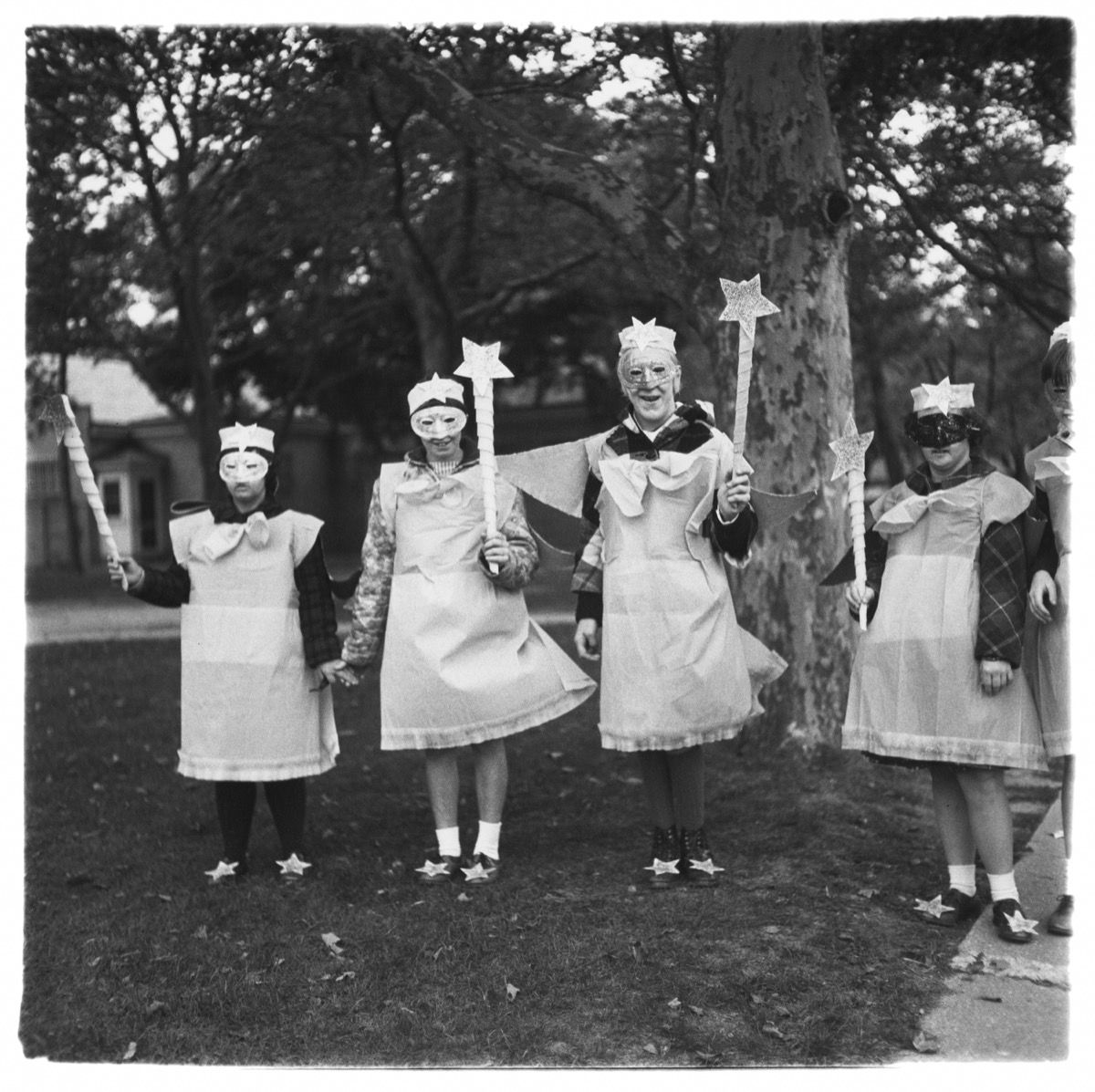
Historically, disability has been portrayed in a variety of ways, though typically, “in specialized forms" (Morris 1991: 85). Diane Arbus in the 1960’s was not afraid to capture her subjects “with no pity,” with a straight, head-on view (Palumbo 2018).
Arbus was both criticized and celebrated for her bold gaze and made no distinction between her subjects (Palumbo 2018).
Fig. Arbus 1970-71. Untitled
“What is normal, anyway? Arbus asked that question through each of her photographs” (Palumbo 2018)
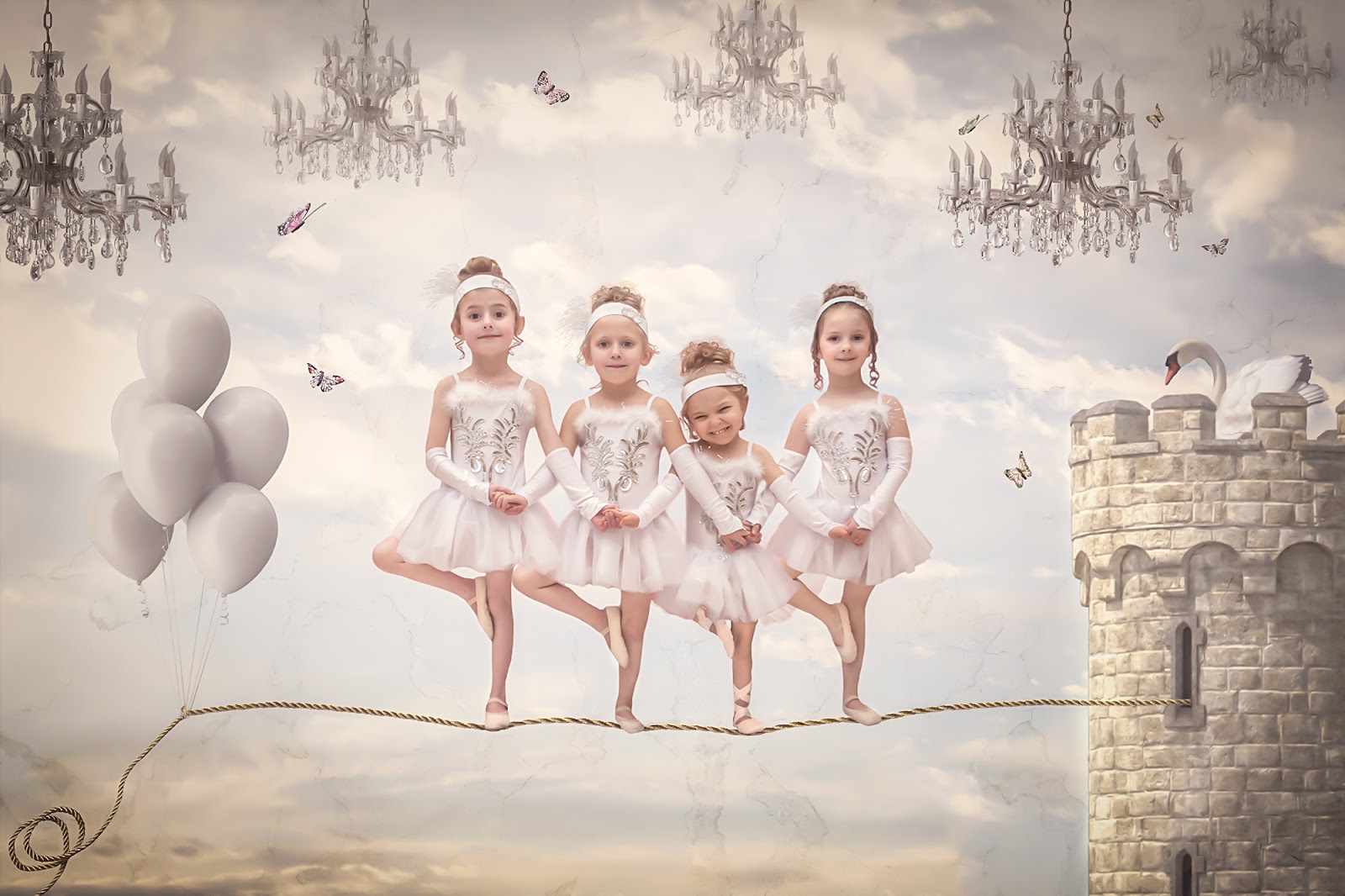
Fig. Slade 2019. Tiny Dancer
Some of the children I feature could have easily been one of Arbus’ ‘freaks’ of her time. The tiny ballerina (featured above) most likely would have lived life-long as institutionalized and medicated. Today she continues to defy many medical diagnosis, and her mother declares, “The only person that can give me a glimpse into Aspyn’s future, is her.”
Luckily society today has made great progress in understanding and including both children and adults with physical or mental irregularities.
MORRIS, Jenny. 1991. Pride Against Prejudice London: Women's Press.
PALUMBO, Jacqui 2018. Revisiting Diane Arbus’s Final and Most Controversial Series. Visual Culture. Available at: https://www.artsy.net/article/artsy-editorial-revisiting-diane-arbuss-final-controversial-series. [accessed 20 March 2019].
Monday, March 18, 2019
Week 8: Do We Have to Change the World?
Fig. 1: Salgado 1944.
After this weeks studies I am left wondering. Do we have to change the world? Or can we create beauty just for its existence alone.
I am reminded of this quote in, A Room With A View, by E. M. Forster:
"We cast a shadow on something wherever we stand, and it is no good moving from place to place to save things; because the shadow always follows. Choose a place where you won’t do harm — yes, choose a place where you won’t do very much harm, and stand in it for all you are worth, facing the sunshine" (1955).
- Figure 1. Sebastiao SALGADO. 1944. V&A [online] Available at: http://www.cornettedesaintcyr.fr/html/fiche.jsp?id=6470554&np=&lng=en&npp=150&ordre=&aff=&r=
- FORSTER, E.M. 1955, A room with a view, Penguin, London.
Saturday, March 16, 2019
Welcome to Holland
Fig. 1: Slade 2019. Dandeflying.
Kathy Goff, a liaison between me and local hospital who is in the process of potentially acquiring some of my images sent me this:
She said, "Your project reminds me of this essay. Your photos are Holland and there's something exciting to discover there, unexpected."
WELCOME TO HOLLAND
by
Emily Perl Kingsley.
c1987 by Emily Perl Kingsley. All rights reservedEmily Perl Kingsley.
"I am often asked to describe the experience of raising a child with a disability - to try to help people who have not shared that unique experience to understand it, to imagine how it would feel. It's like this......
When you're going to have a baby, it's like planning a fabulous vacation trip - to Italy. You buy a bunch of guide books and make your wonderful plans. The Coliseum. The Michelangelo David. The gondolas in Venice. You may learn some handy phrases in Italian. It's all very exciting.
After months of eager anticipation, the day finally arrives. You pack your bags and off you go. Several hours later, the plane lands. The stewardess comes in and says, "Welcome to Holland."
"Holland?!?" you say. "What do you mean Holland?? I signed up for Italy! I'm supposed to be in Italy. All my life I've dreamed of going to Italy."
But there's been a change in the flight plan. They've landed in Holland and there you must stay.
The important thing is that they haven't taken you to a horrible, disgusting, filthy place, full of pestilence, famine and disease. It's just a different place.
So you must go out and buy new guide books. And you must learn a whole new language. And you will meet a whole new group of people you would never have met.
It's just a different place. It's slower-paced than Italy, less flashy than Italy. But after you've been there for a while and you catch your breath, you look around.... and you begin to notice that Holland has windmills....and Holland has tulips. Holland even has Rembrandts.
But everyone you know is busy coming and going from Italy... and they're all bragging about what a wonderful time they had there. And for the rest of your life, you will say "Yes, that's where I was supposed to go. That's what I had planned."
And the pain of that will never, ever, ever, ever go away... because the loss of that dream is a very very significant loss.
But... if you spend your life mourning the fact that you didn't get to Italy, you may never be free to enjoy the very special, the very lovely things ... about Holland."
Kathy Goff is also the mother of three critically ill children.
About this image: this image was completed this semester but was done for a friend and technically not part of my project with children facing opposition. Although it will be available to hospitals as part of my collection.
Figure 1. Bren SLADE. 2019. Dandeflying. Private Collection Bren Slade.
KINGSLEY, Emily Pearl. 1987. Welcome to Holland. V&A [online] March 2019. Available at:http://www.our-kids.org/Archives/Holland.html
The Ballerina
Fig. 1: Slade 2019. Tiny Dancer
Fig. 2: Slade 2019 Aspyn's Class
This is why I do what I do.
See more about the project and additional images at :www.brenslade.com
Figure 1. Bren SLADE. 2019. Tiny Dancer. Available at: www.brenslade.com
Figure 2. Bren SLADE. 2019. Aspyn's Class. Private Collection: Bren Slade.
Wednesday, March 13, 2019
Leon Borensztein

Fig. 1: Borensztein 2016. Sharon. [book]
Leon Borensztein focuses on documentary and psychological portraiture. His subjects, per instruction, don't smile. One of his life's work revolves around images of his daughter with disabilities. His focus is giving a voice to the 'unseen' (Borensztein [online]).
It's interesting as I looked at the interviews he had with such well known entities as Life Magazine, New York Times, and Huffington Post with most the articles titled about his project revolving around the love and devotion of his daughter (as featured in his book "Sharon" 2016). Then one article from an Austria newspaper called their article: "Sharon: Disturbing Family Album." That is quite a view shift from the other media interpretations.
Fig. 2 Slade 2018I also want to give voice to the unseen struggles of parents raising children facing opposition, but I relate more to Micheal Oliver who said, "Disabled people continue to be portrayed as more than or less than human, rarely as ordinary people doing ordinary things" (1990:61). I hope to portray these children in a state of ordinary childhood imagination.
Ordinary children, doing ordinary children things.
Figure 1. Leon BORENSZTEIN. 2016. Sharon. Kehrer Verlag. Available at: www.amazon.com [accessed March 2019]
Figure 2. Bren SLADE. 2018. Available at www.brenslade.com
BORENSZTEIN, Leon. [online]. Available online at: https://www.leonborensztein.com/ [accessed March 2019]
OLIVER, Michael. 1990. The Politics of Disablement. London: MacMillan Press.
Tuesday, March 12, 2019
The Result of 3 Weeks Work!! Project Update!
It began by reading the lovely write-ups the parents were posting me about their children. Then, I had a chance to review a shoot where I had the opportunity to do a live interview with one mother -and I just loved the passion in her voice. An idea began to form and I sent the write-ups back to the parents and asked them to record their voices instead.
I also got permission to filter through their social media profiles and images to create a collection for the project.
Three weeks and MANY hours later this is the result:
https://www.brenslade.com/introductoryvideo
I posted it on social media today- we will see what the response is.
I also got permission to filter through their social media profiles and images to create a collection for the project.
Three weeks and MANY hours later this is the result:
https://www.brenslade.com/introductoryvideo
I posted it on social media today- we will see what the response is.
Margaret Olin

“Marking Time: Photographs from Dheisheh refugee Camp,” is part of the project, “Conversations on the Periphery,” a study of the evolving conversation through murals on the walls of the camp. This selection of eight photographs was first featured in the exhibit, Waiting Rooms of History, at the Kunstverein Paderborn, May-June, 2016. An expanded version was shown in Woodbridge, Connecticut in 2018. Another exhibition is planned for 2020." (Olin 2014-18)
Margaret Olin introduces what she calls the “performative index” where the photograph performs a relation that may or may not depend on actual resemblance (2012). When families view my whimsical photos of these children facing opposition they may find a figurative resemblance to their own struggling child, OR at the same time make a connection to a ‘normal’ healthy, well adjusted child because of the nature in which the children in the project are illustrated in the home and final images; happy, hopeful, playful. Childhood and children’s imagination have cultural consistencies and because the children are presented in both lights, as struggling yet playing in ‘normal’ childhood ways, a broader connection can be made to a larger scope of people.
OLIN, Margaret. 2012.Touching Photographs. University of Chicago Press.
OLIN, Margaret. 2019-2018. Links to Ongoing and Past Projects [online]. Available at: https://touchingphotographs.com/photography/
Saturday, March 9, 2019
Week 6
Weak people are often seen gazing back at us, people of power look away. This is something that caught my attention, in this weeks discussion, in relation to my own photography. If my children are gazing back into the camera will they be perceived in weakness? Is looking away more powerful? Here are two of my images:
On the other hand, I wonder if the expression impacts the interpretation: for example here is Livvy's face up close:
Happy and confidently meeting our gaze. And here is an image I used in a past post where the figure is looking away, but not in power, but perhaps to avoid our own gaze or meet our eyes:
Is Livvy perceived as more vulnerable than Kimball? Livvy and Kimball have similar background stories. Both were removed from their biological parents for drug use. For Livvy is was opioids, for Kimball, meth. Both were adopted in to loving and stable families.
What is my intended representation of these children? Is Livvy also more vulnerable because she is wearing a dress and interacting with animals? Vs. Kimball's and his more dominant (and male) role.
The girls featured in my images often wear dresses intentionally, purposefully (and voluntarily). I strongly disagree with the idea that a girl must be presented in a more male-dominant role or attire to envelop power. Presenting the idea of girl power in the form of male imitation intrinsically demeans femininity at its core and underlies that there is not power in womanhood in its own right. So I will continue to allow the girls to be represented in dresses if they choose (or otherwise if they so desire).
But how they are gazing is an interesting phenomenon and something I will take a closer examination to in my images and project.
On the other hand, I wonder if the expression impacts the interpretation: for example here is Livvy's face up close:
Figure 3: Slade 2018. Livvy 1 (cropped by photographer)
Figure 4: Advert found on www.carsforvetrans.org
So it appears that perhaps it is not a hard and fast rule, but can effect how an image is consumed combined with other elements.
Figure 1: Brenda SLADE 2018. Livvy 1. [photography]. V&A [online]. Available at www.brenslade.com
Figure 2: Brenda SLADE 2017. Brave. [photography]. V&A [online]. Available at www.brenslade.com
Figure 3: Brenda SLADE 2018. Livvy 1. [photography]. V&A [online]. Available at www.brenslade.com
Figure 4: Advert V&A [online]. Available at www.carsforvetrans.org
Figure 3: Brenda SLADE 2018. Livvy 1. [photography]. V&A [online]. Available at www.brenslade.com
Figure 4: Advert V&A [online]. Available at www.carsforvetrans.org
Thursday, February 28, 2019
Week 5 -Quotes
Figure 1. Advert found on www.carsforvetrans.org
Interesting research done first by Miller, Jones and Ellis and then 10 years later by Micheal Bender in the advertising for charities of disabled or otherwise afflicted. It was discovered in both studies that people are more likely donate or contribute when the emotions pulled are guilt, sympathy or pity. But in doing so the advertisements promote the visibility of the people depicted as less than, less capable, and undermining their basic civil rights as equals. (Bender 2003) Eliciting negative emotional responses, but higher rates of donation.
It is noted that "The failure of the individual to adapt or immerse themselves generally in society then generally becomes the 'cause.'" (Evans 1999: 274)
This is particularly applicable to my project and how I choose to portray and represent the children I work with. And while I do hope to elicit empathy (more than sympathy), I strive to present the children as they are: children; laughing, playing, crying, goofing, loving children.
Here are some quote I noted that might be useful as a reference:
"Disabled people are missing from mainstream culture. When we do appear, it is in specialized forms" (Morris 1991: 85).
I don't want to exhibit them as characters that illicit sympathy, or as "Characters that a viewer can't take seriously" (Bogden 2012: 126).
'The answer here lies in integration rather than segregation" (Sheppard in Hunt 1966: 63).
"The focus is to look at the ability, not the disability" (Barnes & Mercer, 2003 p.98).
"Disabled people continue to be portrayed as more than or less human, rarely as ordinary people doing ordinary things" (Oliver 1990: 61).
"Imagining disability as ordinary, as the typical rather than the atypical human experience, can promote practices of equality and inclusion that begin to fulfill the promise of a democratic order" (Thomson 2001: 360).
Recognizing opposition in childhood as ordinary, as the typical rather than the atypical childhood experience, can promote practices of inclusion and the idea that their lives, are lives of value. They, as human beings, are also worth existing.
Figure 1: Advert V&A [online]. Available at www.carsforvetrans.org
BARNES, Colin & Mercer Geoff. 2010. Exploring Disability: A Sociological Introduction Cambridge: Polity Press.
BENDER, Micheal. 2003. Explorations in Dementia London: Jessica Kingsley.
BOGDON, Roger. 2012. Picturing Disability: Begger, Freak, Citizen, and other Photography Rhetoric New York, Syracuse: University Press.
EVANS, Jessica. 1999. Feeble Monsters: Making up Disabled People in Hall, Stuart & Evans, Jessica (eds)1999. The Visual Culture Reader London: Sage.
HUNT, Paul. 1966. The Stigma of Disability London: Geoffrey Chapman.
MORRIS, Jenny. 1991. Pride Against Prejudice London: Women's Press.
OLIVER, Michael. 1990. The Politics of Disablement London: MacMillan Press.
THOMPSON, Rosemarie. 2001. 'Seeing Disabled' in Longmore, Paul and Umansky Lauri (eds) 2014. The New Disability History New York: New York University Press.
Wednesday, February 20, 2019
Week 4 Continued
For this week's activity we had to post one of our new images in our current practice without any explanatory text to reflect on our 'readers' interpretations. I chose to post 'Wild Things 2' as it is one of my new images and I had not shared the image with anyone in the group previously.
These were the responses (posted with permission):
And my response back:
I was pleased with the readings and even was interested in Becky's possible 'oppositional' viewing of something sinister going on. Its interesting to see your work through others eyes.
Figure 1. SLADE, Bren. 2019. Wild Things 2. Available at: www.brenslade.com
Fig. 1 Slade 2019. Wild Things 2.
These were the responses (posted with permission):
And my response back:
Figure 1. SLADE, Bren. 2019. Wild Things 2. Available at: www.brenslade.com
Tuesday, February 19, 2019
Week 4- Dominant, Oppositional, Negotiated
Dominant
Oppositional
Negotiated
I believe a Tableau once created continues to exist. Barthes proclaims regarding the punctum in an image of his mother in the garden, "It exists only for me. For you it would be nothing but an indifferent picture, one of the thousand manifestations of the ordinary' (Barthes, 1980 p.73) While its true that the punctum there may exist particularly regarding his feelings for his mother, that doesn't necessarily negate another persons connection or ability to be pricked by the same image. If it is a well done image, powerful or beautiful or even grotesque, once created I believe it continues to exist - even if translated differently based on individual experience. Maybe your mother gardened, maybe you did, maybe you read poetry about gardens that affected your person, maybe you grew up in the country are passionate about your home, maybe you live in the city and it is what you recognize to have lost. Maybe there is just a feeling there and you don't even know why you connect to it yourself. If a photograph truly has punctum- I think that punctum is a powerful element that transfers based on individual experience and interpretation like a universal beauty we recognize, even if we are not sure why.
As photographers, are we willing to let this happen? I agree with Olin's statement that "The most significant indexical power of the photograph may consequently not lie in the relation between the photograph and its subject, but in relation between the photograph and its beholder or user." (Olin 2012: 114). The same can be true for the punctum.
However, at the same time I would say all images 'exist' only for us, each as an individual. Every image we process is interpreted individually, for no one else has lived as we lived and existed as we exist. All punctums therefore are universal AND unique simultaneously.
Because of this, I often fear the 'oppositional' reading by viewers. Since I work with children, for me that may be views of exploitation or perversion. While I want to allow for individual interpretation I feel protective of my images, and the children they represent.
Barthes, Roland. 1980. Camera Lucida London: Vintage
Olin, Margaret. 2002. Touching Photographs: Roland Barthes' "Mistaken" Identification in Representations No.80. Autumn, 2002: 99-118
Subscribe to:
Posts (Atom)
Reflections
As I look back through this, my MA journey with Falmouth, I am pretty amazed at the experiences I have had and the progress I have made pers...
-
"...working within the collaborative has the advantage of helping to constitute a group identity, which in turn led to the development...
-
Fig. 1: Borensztein 2016. Sharon . [book] Leon Borensztein focuses on documentary and psychological portraiture. His subjects, per...